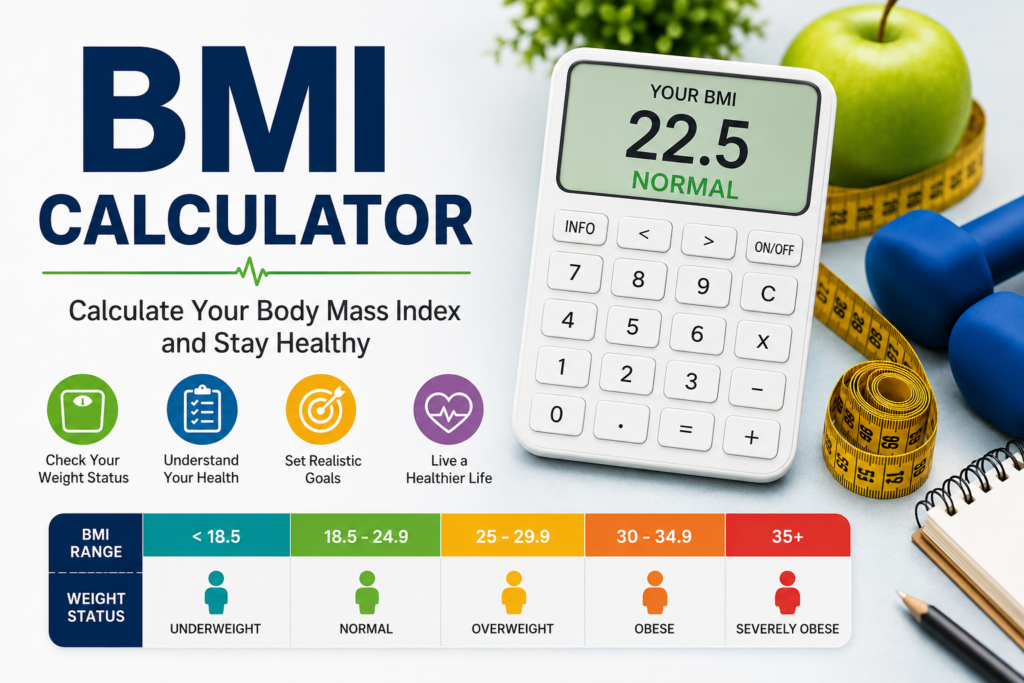
BMI Calculator
Your BMI
BMI Calculator: Calculate Your Body Mass Index and Stay on Track with Your Health
Maintaining a healthy weight is one of the most important steps toward a healthier lifestyle. Fortunately, a BMI Calculator makes it easy to understand whether your weight is appropriate for your height. Within seconds, you can calculate your Body Mass Index (BMI) and gain valuable insight into your overall health.
Whether you're planning to lose weight, gain muscle, or simply monitor your fitness, using a BMI Calculator is a smart starting point. Although BMI doesn't measure body fat directly, it remains one of the most trusted health screening tools used worldwide.
What Is a BMI Calculator?
A BMI Calculator is an online tool that calculates your Body Mass Index (BMI) using your height and weight. It estimates whether you're underweight, at a healthy weight, overweight, or obese.
BMI Formula
BMI = Weight (kg) ÷ Height² (m²)
Example:
- Weight: 70 kg
- Height: 1.75 m
- BMI = 70 ÷ (1.75 × 1.75) = 22.9
A BMI of 22.9 falls within the healthy weight category.
Why Is a BMI Calculator Important?
A BMI Calculator helps you:
- Understand your ideal weight.
- Track weight-loss progress.
- Recognize health risks.
- Set fitness goals.
- Develop healthy habits.
- Monitor your overall wellness.
BMI Categories Explained
| BMI Range | Weight Category | Health Risk |
|---|---|---|
| Below 18.5 | Underweight | Higher risk of nutritional deficiencies |
| 18.5 – 24.9 | Healthy Weight | Lowest health risk |
| 25.0 – 29.9 | Overweight | Increased risk of chronic diseases |
| 30.0 – 34.9 | Obesity Class I | High health risk |
| 35.0 – 39.9 | Obesity Class II | Very high health risk |
| 40+ | Obesity Class III | Extremely high health risk |
How to Calculate BMI
Step 1: Measure Your Weight
Use a digital weighing scale and record your weight in kilograms.
Step 2: Measure Your Height
Measure your height in meters. Divide centimeters by 100 if needed.
Step 3: Calculate BMI
Use the BMI formula or an online BMI Calculator for instant results.
Understanding Your BMI Result
Underweight
A BMI below 18.5 may indicate insufficient nutrition and can increase the risk of fatigue, weak immunity, and osteoporosis.
Healthy Weight
A BMI between 18.5 and 24.9 generally indicates a healthy body weight.
Overweight
A BMI between 25 and 29.9 suggests excess body weight and may increase the likelihood of chronic diseases.
Obesity
A BMI of 30 or above is associated with several health conditions including:
- Heart Disease
- Type 2 Diabetes
- High Blood Pressure
- Stroke
- Sleep Apnea
- Joint Pain
- Fatty Liver Disease
Benefits of Using a BMI Calculator
- Quick and accurate
- Easy to use
- Free health assessment
- Tracks fitness progress
- Supports weight management
- Encourages healthier habits
Limitations of BMI
Although BMI is useful, it cannot measure:
- Body Fat Percentage
- Muscle Mass
- Bone Density
- Age
- Gender
- Fat Distribution
Athletes may have a high BMI despite having low body fat.
Tips to Maintain a Healthy BMI
- Eat nutritious foods.
- Exercise for at least 150 minutes each week.
- Drink plenty of water.
- Sleep 7–9 hours daily.
- Manage stress.
- Check your BMI regularly.
Frequently Asked Questions
Is a BMI Calculator accurate?
It provides a reliable estimate but should not be the only health measurement.
Can I have a normal BMI and still be unhealthy?
Yes. Blood pressure, cholesterol, exercise, and nutrition also affect your health.
How often should I calculate BMI?
Every two to three months is generally sufficient.
Final Thoughts
A BMI Calculator is a simple and effective way to monitor your weight and overall health. While BMI doesn't tell the complete story, it offers an excellent starting point for improving your lifestyle.
Combine your BMI results with healthy eating, regular exercise, quality sleep, and routine medical checkups for the best long-term health outcomes.